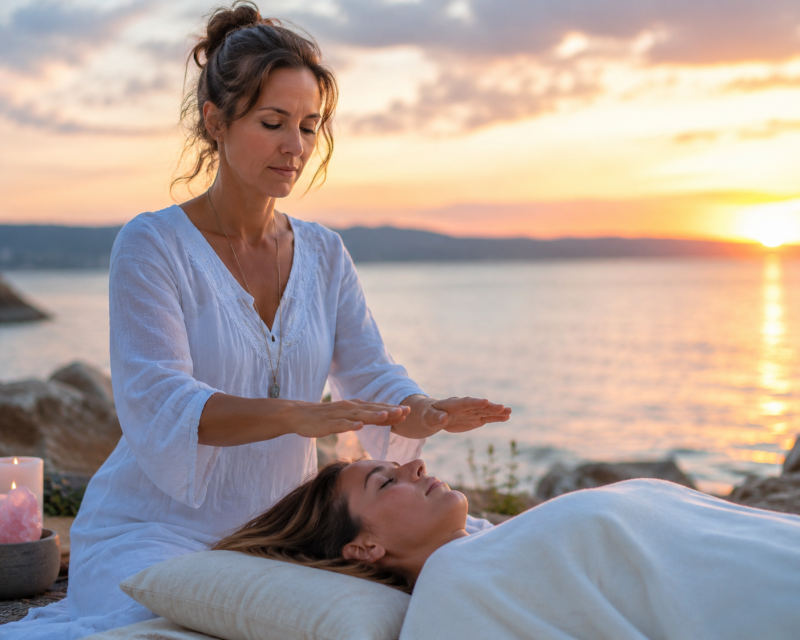
Doing Reiki by the water is often described as especially powerful not because water “magically boosts” it, but because the environment naturally supports the same conditions Reiki is meant to create: calm, presence, and nervous system regulation.
Water environments—lakes, oceans, rivers—tend to have a soft rhythmic quality. That sound and movement can gently shift the body out of a stress response and into a parasympathetic state (rest, digest, restore). In that relaxed state, Reiki sessions often feel deeper simply because the body is more receptive to stillness.
There’s also a strong sensory component. The combination of open air, natural light, and flowing water reduces cognitive load. Your mind has fewer artificial stimuli competing for attention, so it becomes easier to slow down, breathe, and stay present during the session.
From a more spiritual perspective, many traditions associate water with emotional release and purification. In Reiki practice, people often use that symbolism as a way to set intention—letting go of emotional “weight” while being near something physically flowing and non-static. The water becomes a mirror for that inner process: what feels stuck can be imagined as being gently carried away.
There’s also something grounding in the vastness of it. Looking at a horizon of water can shift perspective—personal stressors feel smaller, and the body often follows that cue by relaxing its protective tension patterns.
So the benefit isn’t that Reiki changes because of water, but that water changes the human system receiving Reiki. The setting supports openness, emotional ease, and a quieter mental space, which is exactly the state where people tend to feel the practice most deeply.
Add comment
Comments